The Problem
Healthcare staff needed a digital system to track working hours accurately, log patient interactions, maintain clinical records, and export reports for compliance. Before this project, teams were stuck with manual shift logging on paper or spreadsheets, missing clinical documentation, poor incident tracking, and no centralized reporting — everything had to be pieced together by hand.
The Solution
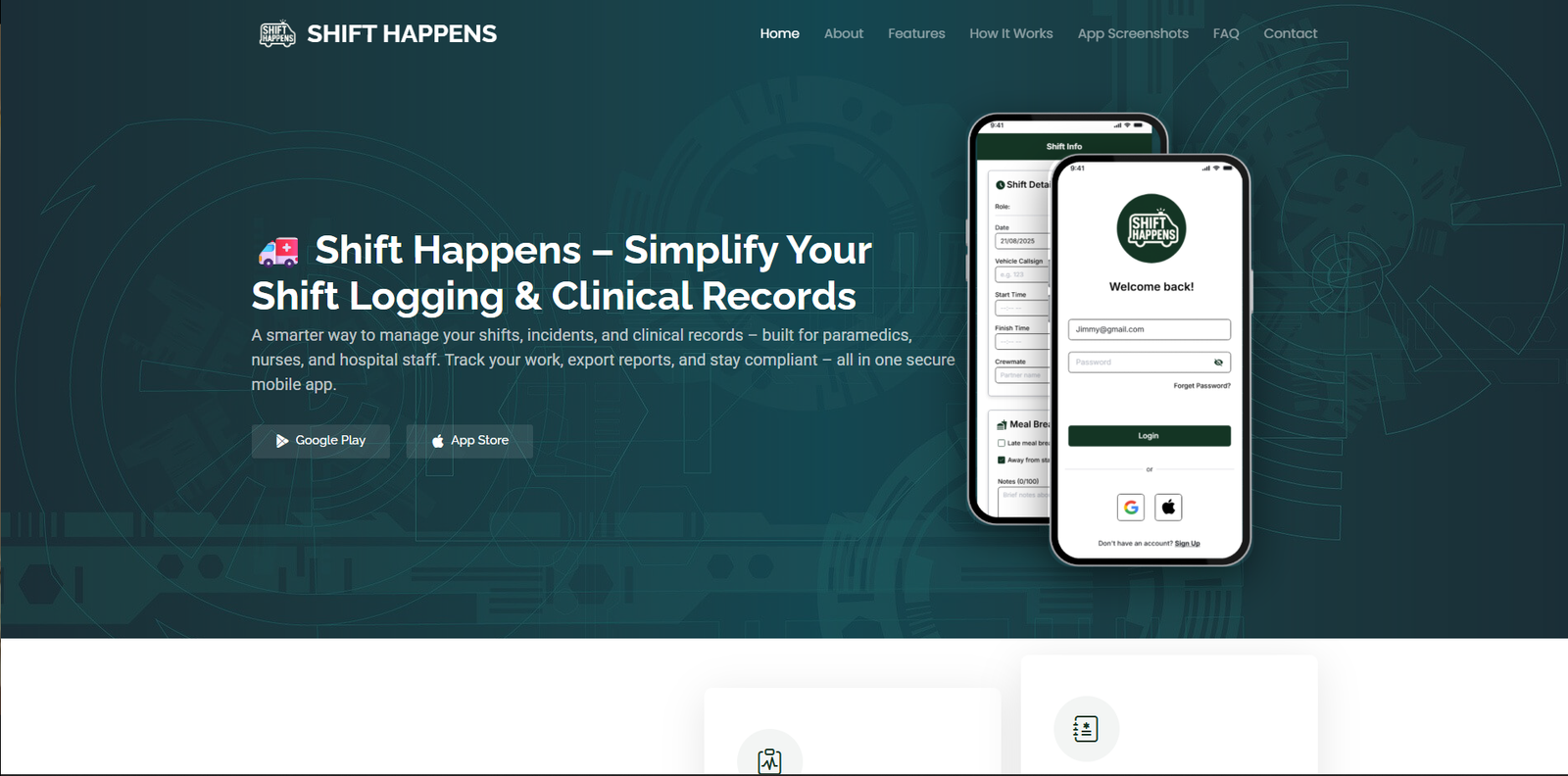
I designed and developed a full-stack healthcare shift tracking platform: a responsive website, secure RESTful APIs built on ASP.NET Core with JWT authentication, and cross-platform mobile apps built with React Native for both Android and iOS. The result is a scalable healthcare workforce management solution that works seamlessly across web and mobile, letting staff log shifts, document clinical work, and report incidents from wherever they are.
Key Features
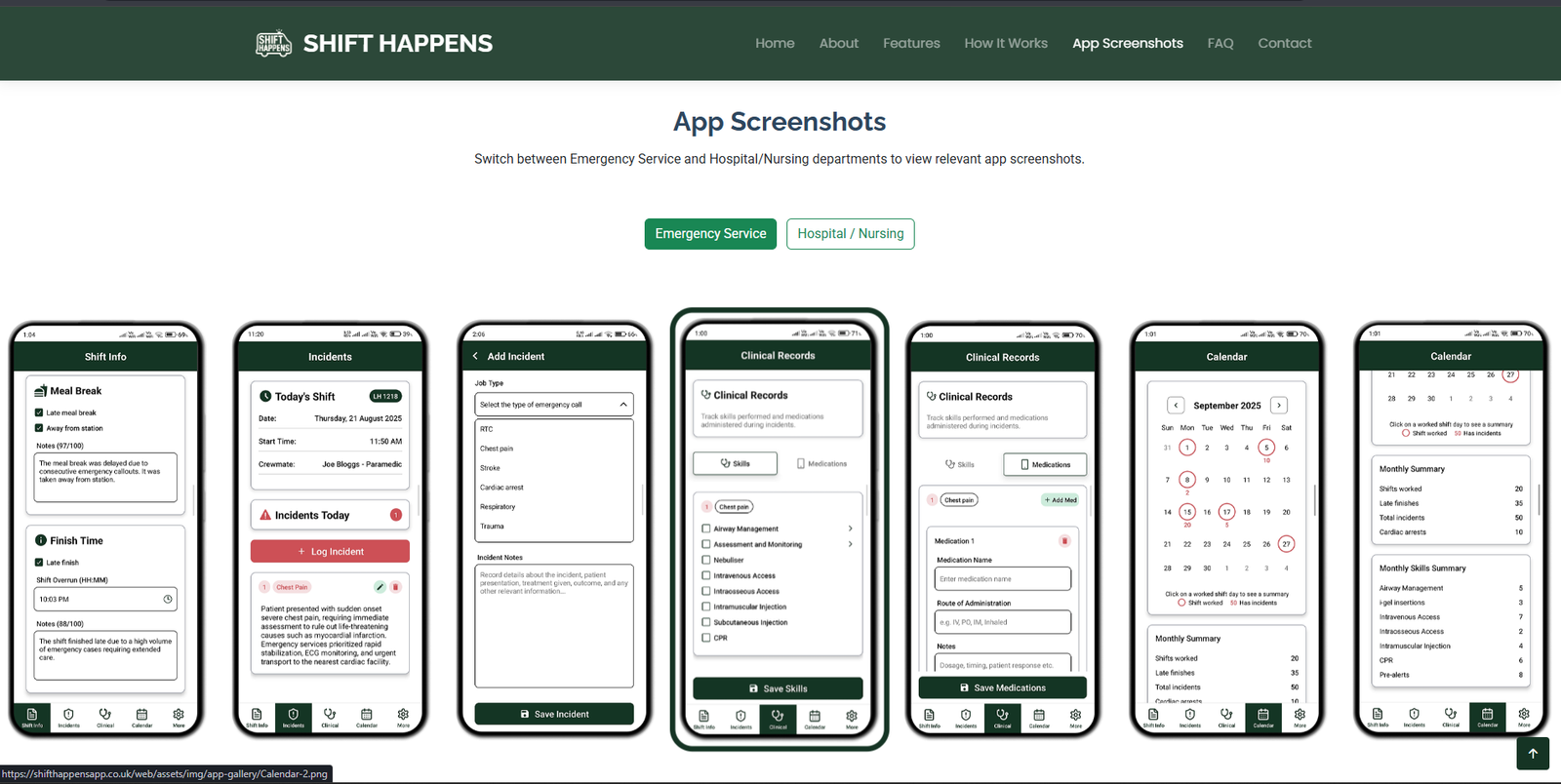
Smart shift logging — healthcare professionals can start and end shifts instantly, log breaks, and track overtime without manual entry.
Clinical records management — staff document patient interactions, procedures performed, medications administered, and completed skills, building a digital record automatically as they work.
Incident reporting module — structured forms let staff log incidents, categorize emergencies, and add timestamps and notes, built for audits and compliance reviews.
Calendar & reporting dashboard — monthly shift summaries with downloadable reports in PDF, CSV, and Excel, kept compliance-friendly by design.
Admin control panel — admins manage users, view reports, control data, and monitor usage from one place.
Technical Highlights
The backend runs on ASP.NET Core with a RESTful API architecture, JWT-based authentication, role-based permissions, and encrypted data storage on Microsoft SQL Server — built for scalable endpoints as usage grows. The mobile apps share a single React Native codebase across Android and iOS, with real-time sync to the API, offline support, and push notifications, so the same native-feel experience works whether or not staff have a live connection. The whole platform is deployed to the cloud with HTTPS/SSL encryption throughout. The architecture was designed for future growth from day one — the API layer supports modular expansion, so new modules like billing, insurance integration, or biometric attendance can be added later without touching performance.
Results
After deployment, the platform delivered a 30% reduction in manual logging, faster shift reporting, improved compliance, and better workforce collaboration — freeing healthcare professionals to focus on patient care instead of administrative paperwork.
FAQ
What problem does the Shift Happens platform solve for healthcare teams?
It replaces manual, paper-based shift logging and scattered clinical documentation with one digital system — staff track hours, log patient interactions and procedures, report incidents, and pull compliance reports from a single platform instead of piecing it together by hand.
Why build both a website and native mobile apps instead of just one?
Healthcare staff work on the move, often without reliable connectivity, so the React Native apps needed offline support and native performance on Android and iOS, while the responsive website covers admin and desktop workflows — both talk to the same secure ASP.NET Core API.
How is sensitive clinical and patient data kept secure?
The API uses JWT-based authentication with role-based permissions, all data is encrypted at rest in SQL Server, and the whole platform runs over HTTPS/SSL — access is scoped so staff only see what their role permits.
Can the platform generate reports for compliance audits?
Yes — the calendar and reporting dashboard produces monthly shift summaries and downloadable reports in PDF, CSV, and Excel, and the incident reporting module timestamps and categorizes every entry specifically to support audits and reviews.
Is the platform able to grow with a healthcare organization's needs?
Yes — the ASP.NET Core API layer was built for modular expansion, so additional modules such as billing, insurance integration, or biometric attendance can be added later without a rebuild or performance hit.